
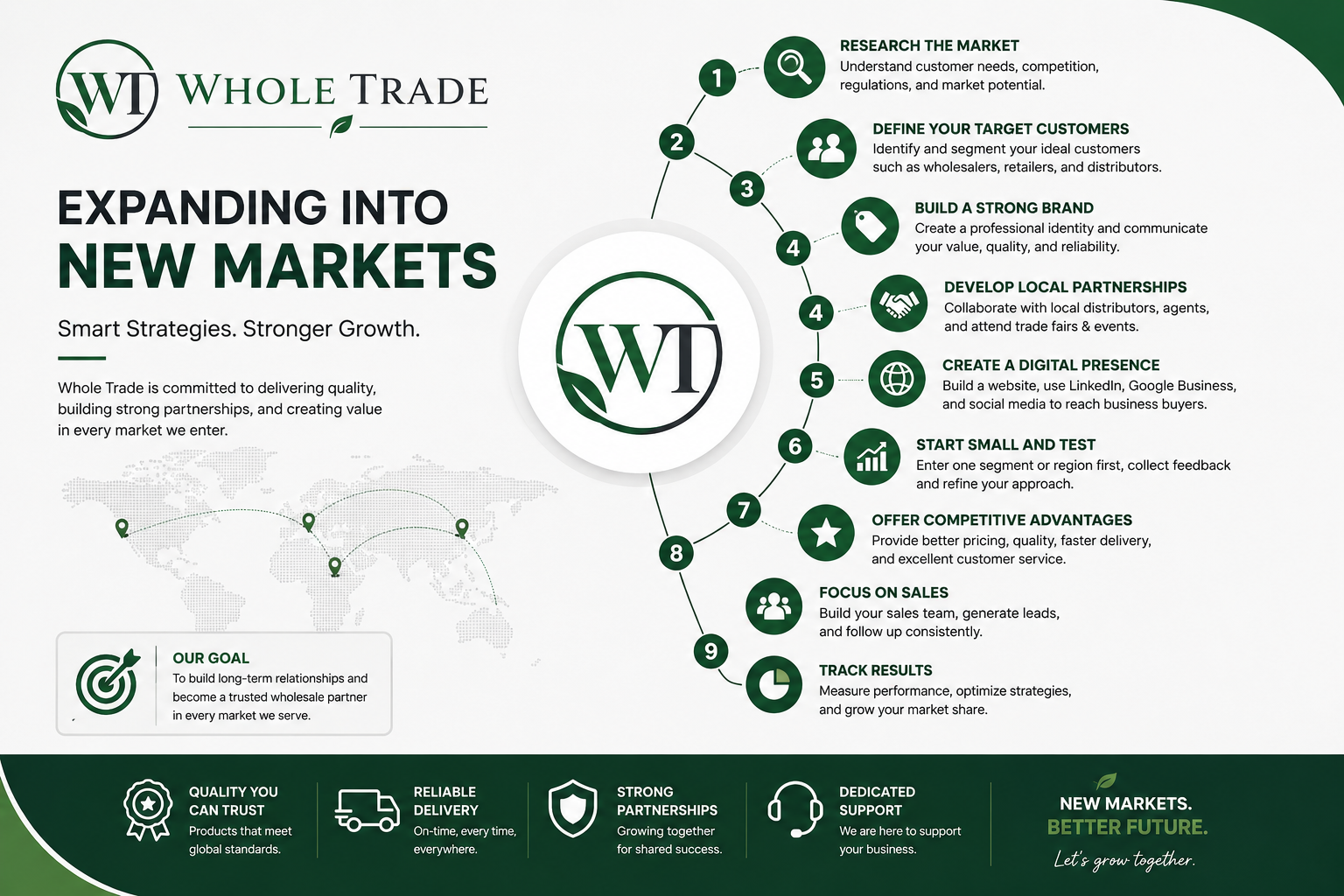
How to Expand Your Business into New Markets: A Practical Guide for Growth
Why Market Expansion Matters
Expanding into new markets helps businesses:
- Increase sales and revenue streams
- Reduce dependency on a single market
- Reach new customer segments
- Build brand recognition
- Discover new business partnerships
- Gain a competitive advantage
- Access emerging industry opportunities
However, successful expansion requires careful planning and execution.
Step 1: Conduct Market Research
Before entering a new market, it is essential to understand the market landscape.
Research factors such as:
- Market size and growth potential
- Customer preferences and buying behavior
- Competitor analysis
- Industry trends
- Regulatory requirements
- Pricing expectations
Ask questions like:
- Is there demand for your product or service?
- Who are the major competitors?
- What challenges might you face?
- What makes your offering unique?
Comprehensive market research helps reduce risks and identify opportunities.
Step 2: Identify Your Target Audience
Not every customer in a new market will be your ideal customer.
Define your target audience based on:
- Industry
- Business size
- Geographic location
- Purchasing power
- Demographics
- Consumer behavior
Understanding your audience enables you to create effective marketing strategies and product positioning.
Step 3: Adapt Your Product or Service
Different markets often have different preferences and requirements.
Consider:
- Local language support
- Packaging modifications
- Pricing adjustments
- Product customization
- Regulatory compliance
- Cultural preferences
Businesses that localize their offerings often experience higher acceptance and customer satisfaction.
Step 4: Build a Strong Digital Presence
A strong online presence is critical when entering new markets.
Focus on:
Website Optimization
- Mobile-friendly design
- Fast loading speed
- SEO optimization
- Localized content
Search Engine Optimization (SEO)
Target market-specific keywords to improve visibility.
Examples:
- Industrial machinery suppliers in India
- Organic food exporters in Europe
- Manufacturing solutions in Tamil Nadu
Social Media Marketing
Utilize platforms such as:
- YouTube
Share industry insights, customer success stories, and product updates.
Step 5: Participate in Trade Fairs and Exhibitions
Trade fairs are among the most effective ways to enter new markets.
Benefits include:
- Meeting potential buyers
- Connecting with distributors
- Understanding industry trends
- Networking with decision-makers
- Showcasing products and services
- Generating qualified leads
Industry exhibitions provide direct access to customers and partners that would otherwise take years to reach.
Platforms like GlobalExpoHub help businesses discover relevant trade fairs across industries and countries.
Step 6: Build Strategic Partnerships
Local partnerships can significantly accelerate market entry.
Potential partners include:
- Distributors
- Dealers
- Agents
- Retailers
- Industry associations
- Local businesses
Partnerships provide market knowledge, customer access, and operational support.
Step 7: Develop a Market Entry Strategy
Choose the right entry model based on your goals and resources.
Common approaches include:
Direct Sales
Selling directly to customers.
Distributor Network
Working through local distributors.
Franchise Model
Expanding through franchise partners.
Joint Ventures
Partnering with local businesses.
E-commerce Expansion
Selling through online marketplaces and digital channels.
Select the strategy that aligns with your business objectives and budget.
Step 8: Focus on Branding and Trust Building
Customers are more likely to buy from brands they trust.
Build credibility through:
- Professional branding
- Customer testimonials
- Certifications
- Industry memberships
- Case studies
- Quality assurance
Consistency in communication and service delivery strengthens brand reputation.
Step 9: Monitor Performance and Adapt
Market expansion is an ongoing process.
Track key metrics such as:
- Lead generation
- Customer acquisition costs
- Sales growth
- Market share
- Customer feedback
- Return on investment (ROI)
Use data-driven insights to refine strategies and improve results.
Common Challenges in Market Expansion
Businesses often face:
- Cultural differences
- Regulatory barriers
- Strong competition
- Logistics issues
- Pricing challenges
- Limited market awareness
A well-planned strategy and continuous learning can help overcome these obstacles.
How Trade Shows Accelerate Market Expansion
Trade exhibitions provide businesses with a unique opportunity to:
- Meet thousands of potential customers
- Explore emerging markets
- Connect with verified buyers and distributors
- Launch new products
- Build international business relationships
- Gain industry insights
Participating in industry-specific trade fairs can significantly reduce the time required to establish a presence in a new market.
Conclusion
Expanding into a new market is one of the most effective ways to drive business growth and create long-term success. By conducting thorough research, understanding customer needs, building strategic partnerships, and leveraging trade fairs and digital marketing, businesses can successfully enter and thrive in new markets.
The key is to approach expansion strategically, remain adaptable, and continuously look for opportunities to connect with customers and industry stakeholders.
Ready to explore new business opportunities? Discover international trade fairs, connect with industry leaders, and expand your business reach with GlobalExpoHub.



 Continue with Google