
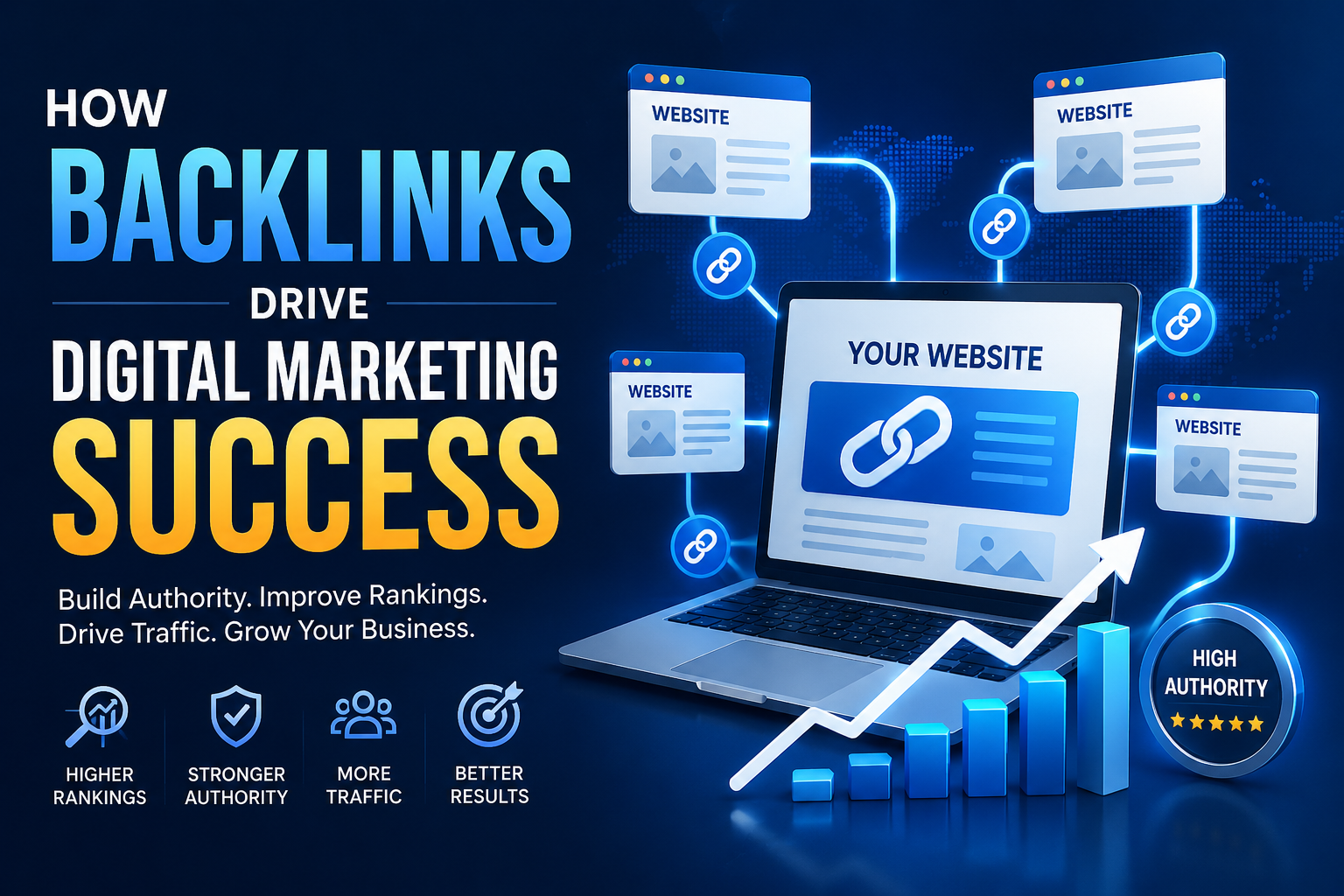
How Backlinks Drive Digital Marketing Success: The Complete Guide to Building Online Authority
How Backlinks Drive Digital Marketing Success
In today's competitive online landscape, businesses need more than just a well-designed website to attract customers. Search engines evaluate hundreds of factors before ranking websites, and backlinks remain one of the most influential ranking signals. A strong backlink profile can significantly enhance digital marketing performance by increasing visibility, authority, and traffic.
This article explores the importance of backlinks and how they contribute to a successful digital marketing strategy.
What Are Backlinks?
Backlinks, also known as inbound links or incoming links, are hyperlinks from one website to another. When a website links to your content, search engines view it as a vote of confidence in the value and relevance of your information.
For example, if a reputable industry blog links to your website, search engines interpret this as a signal that your content is trustworthy and useful.
Why Backlinks Matter in Digital Marketing
Backlinks play a critical role in digital marketing because they directly influence how search engines assess website authority and relevance.
1. Improve Search Engine Rankings
Search engines such as Google use backlinks as a ranking factor. Websites with high-quality backlinks are often rewarded with better search rankings.
Benefits include:
- Higher visibility in search results
- Increased organic traffic
- Better keyword rankings
- Improved domain authority
When reputable websites link to your content, search engines are more likely to trust and promote your pages.
2. Increase Website Authority
Website authority reflects the trustworthiness and credibility of your domain. Quality backlinks from respected websites strengthen your authority and help establish your business as an industry leader.
The more authoritative websites linking to your content, the stronger your online reputation becomes.
3. Drive Referral Traffic
Backlinks don't only help with SEO. They also generate direct referral traffic from users who click links on other websites.
Referral traffic often brings:
- Highly targeted visitors
- Better engagement rates
- Increased lead generation opportunities
- Improved conversion potential
Visitors arriving through relevant backlinks are more likely to be interested in your products or services.
4. Enhance Brand Visibility
When your content is featured on multiple websites, blogs, directories, and industry publications, your brand gains wider exposure.
Benefits include:
- Increased brand awareness
- Greater audience reach
- More online mentions
- Stronger industry recognition
This expanded visibility contributes significantly to long-term digital marketing success.
5. Support Content Marketing Efforts
Quality content naturally attracts backlinks. At the same time, backlinks help distribute your content to broader audiences.
Popular content formats that attract backlinks include:
- Industry research reports
- Case studies
- Infographics
- Expert guides
- Statistics and data-driven articles
Combining content marketing with link-building strategies creates a powerful digital marketing ecosystem.
Types of Backlinks
Natural Backlinks
These are earned organically when other websites find your content valuable enough to reference.
Guest Post Backlinks
Generated by contributing articles to relevant industry blogs and including links back to your website.
Directory Backlinks
Obtained through reputable business directories and industry-specific listings.
Editorial Backlinks
Given by publishers and journalists who reference your content as a reliable source.
Social Media Links
While most social links are nofollow, they can increase content visibility and indirectly contribute to backlink opportunities.
Quality vs Quantity: What Matters Most?
Not all backlinks are created equal.
A few backlinks from authoritative websites are typically more valuable than hundreds of low-quality links.
Quality backlinks usually come from:
- Relevant industry websites
- High-authority domains
- Trusted news publications
- Educational websites
- Government resources
Avoid spammy link-building practices, as they can harm search rankings and damage your website's reputation.
Effective Strategies to Build High-Quality Backlinks
Create Exceptional Content
Publish informative, unique, and valuable content that people naturally want to reference.
Guest Blogging
Write articles for authoritative industry websites to build credibility and earn quality backlinks.
Digital PR Campaigns
Share newsworthy content, reports, and insights that attract media attention and citations.
Resource Page Outreach
Identify relevant resource pages and suggest your content as a valuable addition.
Broken Link Building
Help website owners replace broken links with relevant content from your website.
Industry Partnerships
Collaborate with industry organizations, associations, and business partners to gain relevant backlinks.
Common Backlink Mistakes to Avoid
- Purchasing low-quality backlinks
- Using automated link-building tools
- Excessive link exchanges
- Building links from irrelevant websites
- Ignoring content quality
- Over-optimizing anchor text
Focusing on ethical and sustainable link-building practices ensures long-term SEO success.
Measuring Backlink Success
Monitor backlink performance using SEO tools and analytics platforms.
Key metrics include:
- Number of referring domains
- Domain authority
- Organic traffic growth
- Keyword rankings
- Referral traffic
- Conversion rates
Regular monitoring helps identify opportunities for improvement and growth.
Conclusion
Backlinks remain one of the most important elements of digital marketing and SEO. They help improve search rankings, increase website authority, drive referral traffic, and strengthen brand credibility. Businesses that invest in quality content and ethical link-building strategies can achieve sustainable online growth and long-term digital marketing success.
A strong backlink strategy is not just about gaining links—it's about building trust, authority, and meaningful connections across the digital landscape.

 Continue with Google